Which Monofilament Line Properties Affect Casting Distance?
Every angler eventually asks the same thing: will a thinner line cast farther? The short answer is yes. The useful answer is why.
By Vitaliy Kremnets · Founder & CEO, KATRAN GmbH
“Will I cast farther if I switch to a thinner line?” Almost every angler has asked it. The answer is yes — but not simply because a thinner line slips through the air more easily.
When you reduce line diameter, several physical properties change at once, and each one cuts a different source of energy loss during the cast. Trim enough of them and the lead simply travels farther. To see it clearly, let’s change one thing, and one thing only.
Keep everything else identical
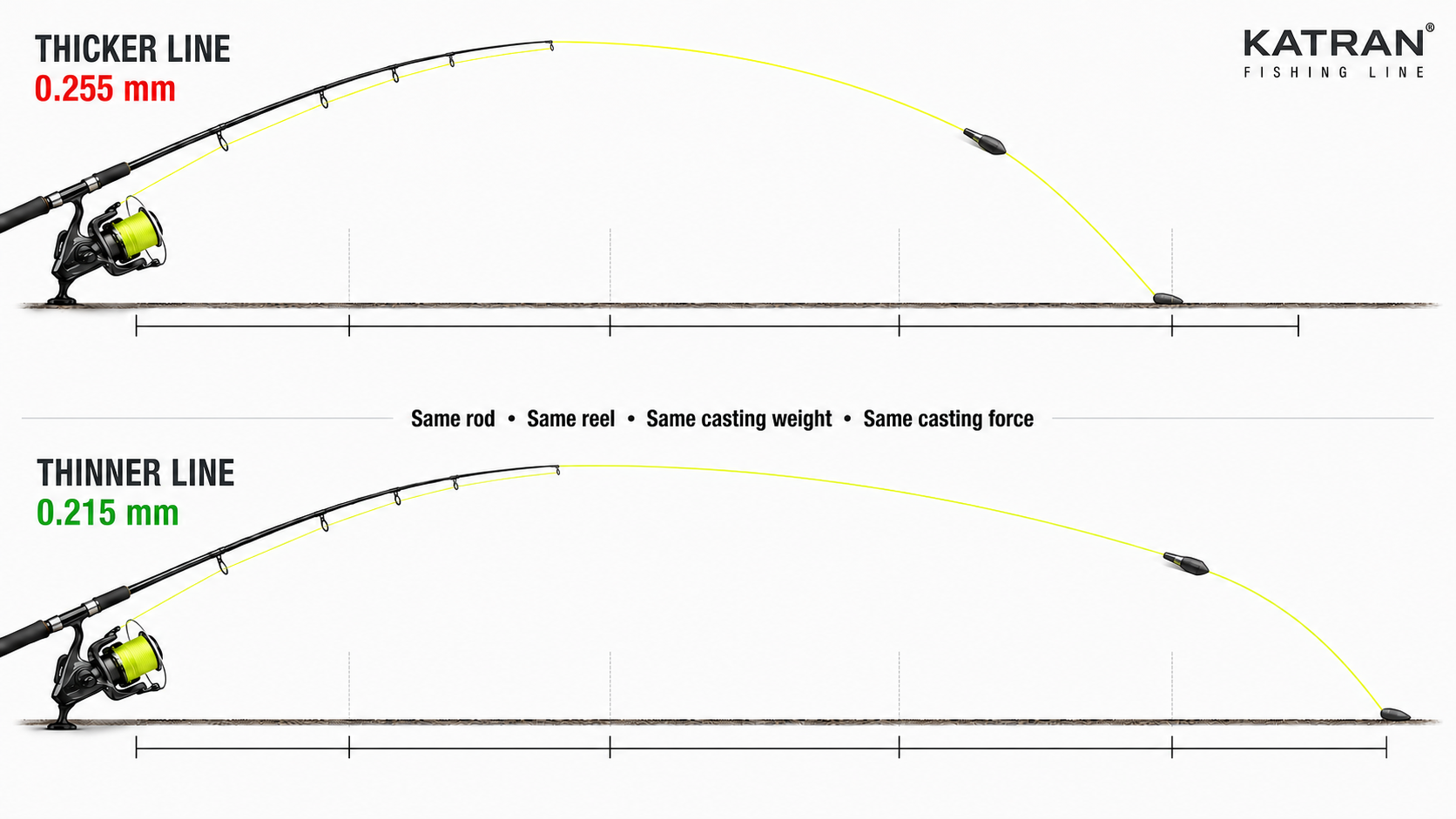
Same rodSame reelSame leadSame techniqueSame weather
The only variable we change is the line — for example, swapping a 0.255 mm line for a 0.215 mm one. So what actually happens?
01 · Line weight
A Lighter Line Steals Less Energy
This is the factor most anglers overlook. Throughout the cast, the lead is constantly dragging fresh line off the spool behind it. The heavier that line, the more of the lead’s energy goes into accelerating it — energy that never reaches the target.
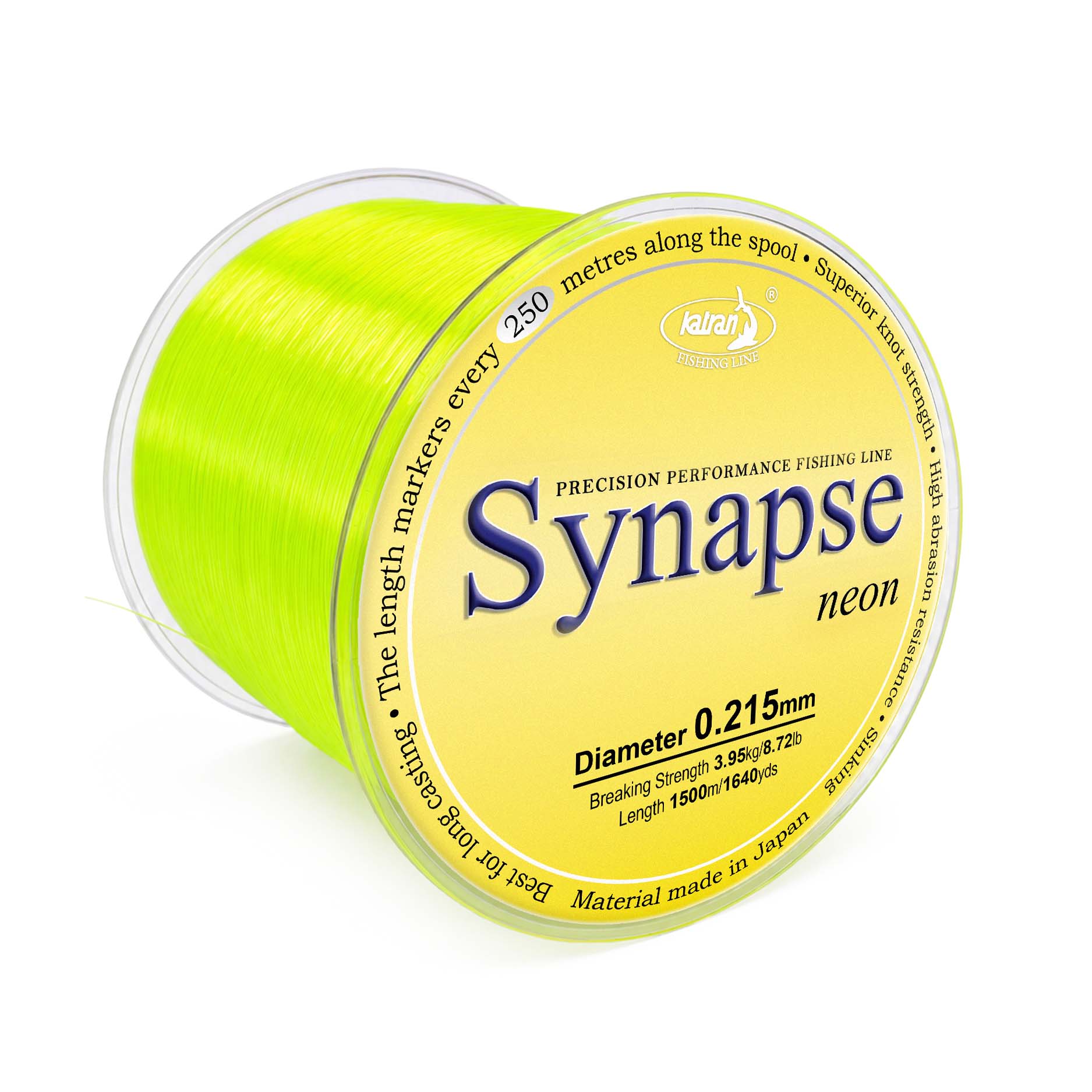
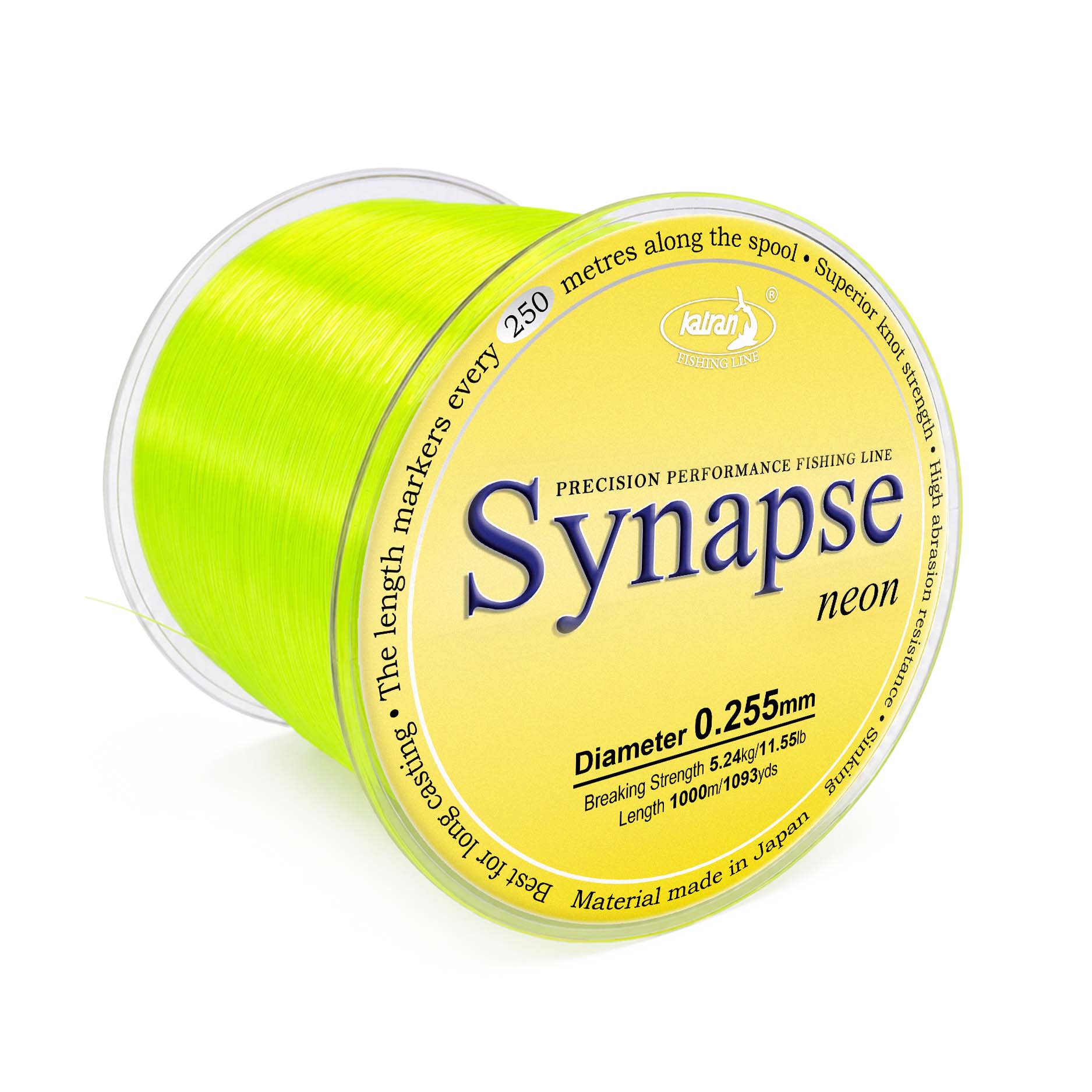
Drop the diameter from 0.255 mm to 0.215 mm and the cross-sectional area falls by almost 29%. For the same material, the weight per metre drops by roughly the same amount. There is simply less line to haul into the air, and less energy wasted doing it — the same Synapse Neon line, in two diameters, shows how small that step really is:
0.215 mmthinner
vs
0.255 mmthicker
02 · Air resistance
Less Line, Less Drag
As the lead flies, it tows the line behind it. Early in the cast the line moves almost along its own axis, so drag stays small. On the way down, though, the whole length of line is travelling forward and downward at the same time — now it meets the air side-on, across its full surface, and that is where aerodynamic drag peaks.
A thinner line presents a smaller surface to the airflow. Less drag means the lead holds on to more of its speed for longer.
03 · Wind
A Thinner Line Is a Smaller Sail
Wind acts on the line, not only on the lead. A thicker line behaves like a bigger sail. A headwind pushes back on it and slows the lead; a crosswind bows the line into a curve, exposing even more of its length to the air and adding still more drag.
Thin the line and you shrink both effects at once.
04 · The guides
An Easier Path Through the Rings
Leaving the spool, the line springs off in expanding coils, and the first guide has to gather and straighten them. That, too, quietly costs you energy. A thinner, more supple line changes shape more willingly and slips through the guides with less resistance.
It is exactly why modern distance-casting rods run a large 50 mm first guide — to give those coils room to settle.
05 · The spool
It Comes Off the Reel More Freely
For the same length of line, a smaller diameter takes up less room on the spool. That is what makes wide, shallow Long Cast spools possible — and a line leaving that kind of spool meets less friction on the way out.
Less friction, once again, means more distance.
The sum
Why All These Factors Matter
No single property wins you distance. Reducing line diameter improves several of them at the same time:
Lower line weightLess energy spent accelerating the line.
Lower aerodynamic dragSmaller surface meeting the airflow.
Less wind resistanceA thinner line is a smaller sail.
Smoother guide passageSupple line straightens more easily.
Lower spool frictionComes off the reel more freely.
Any one of them looks minor. Stacked together, they add up to a distance gain you can actually measure.
The trade-off
Is a Thinner Line Always Better?
No. A thinner line usually gives up breaking strength and abrasion resistance. No line is right for every situation. The goal is not the thinnest line on the shelf — it is the thinnest line still strong enough for the water you are fishing.
Maximum casting distance is not about throwing harder. It is about wasting less energy.
A word from our founder
For more than ten years I’ve been designing monofilament lines for KATRAN, and the same truth keeps coming back: there is no single “best” line — only the best line for the water in front of you. Some of ours are built for pure distance, others for snaggy, abrasive ground.
Distance is not about force. It is about removing the small losses — weight, drag, friction — one by one. So pick the thinnest line that still holds up to your conditions, and let the physics do the rest.
Fish thinner than you think — but never thinner than your conditions allow.